
Blog
What Is Tirzepatide? Complete Guide to Tirzepatide Research
Aug
Tirzepatide has become one of the most widely discussed compounds in modern metabolic and peptide research. Its distinctive activity across the GIP and GLP-1 receptor pathways has generated substantial scientific interest and made tirzepatide an important subject of metabolic research.
For researchers searching for tirzepatide research peptide, tirzepatide research compound, or tirzepatide research UK, understanding the compound’s identity, receptor profile, research context, documentation and regulatory distinction is essential.
What Is Tirzepatide?
Tirzepatide is a peptide compound that acts on receptors for glucose-dependent insulinotropic polypeptide (GIP) and glucagon-like peptide-1 (GLP-1).
This dual-receptor activity distinguishes tirzepatide from compounds that primarily target GLP-1 alone.
In the European Union, tirzepatide is the active substance in Mounjaro, an authorised prescription medicine. EMA states that Mounjaro is used for type 2 diabetes and weight management under specified clinical criteria.
Research-use tirzepatide should not be confused with an approved prescription medicine.
How Does Tirzepatide Work?
Tirzepatide is investigated through its interaction with two incretin-related receptor pathways:
These pathways are associated with metabolic signalling and physiological processes involving glucose regulation, insulin response, appetite and energy balance.
From a research perspective, this makes tirzepatide relevant to investigations involving:
- GIP receptor activity
- GLP-1 receptor activity
- Incretin signalling
- Metabolic pathways
- Endocrine research
- Peptide receptor biology
- Cellular signalling
Tirzepatide Research Peptide
The term tirzepatide research peptide is commonly used to describe tirzepatide material intended for laboratory investigation rather than clinical treatment.
Researchers evaluating research material should examine:
- Compound identity
- Presentation
- Batch number
- Analytical documentation
- Certificate of Analysis where available
- Purity information
- Storage requirements
- Packaging
- Traceability
A product description alone should not be treated as equivalent to batch-specific analytical evidence.
Tirzepatide vs GLP-1 Peptides
Tirzepatide differs from a conventional GLP-1-focused compound because its research profile involves both GIP and GLP-1 receptor activity.
This dual mechanism is one reason tirzepatide has become a significant subject of scientific investigation.
Why Is Tirzepatide Important in Peptide Research?
Researchers are interested in tirzepatide because it provides an opportunity to study interconnected incretin pathways.
Research areas can include:
- Receptor signalling
- Metabolic research
- Endocrine research
- Peptide biology
- GIP signalling
- GLP-1 signalling
- Cellular response
- Analytical characterisation
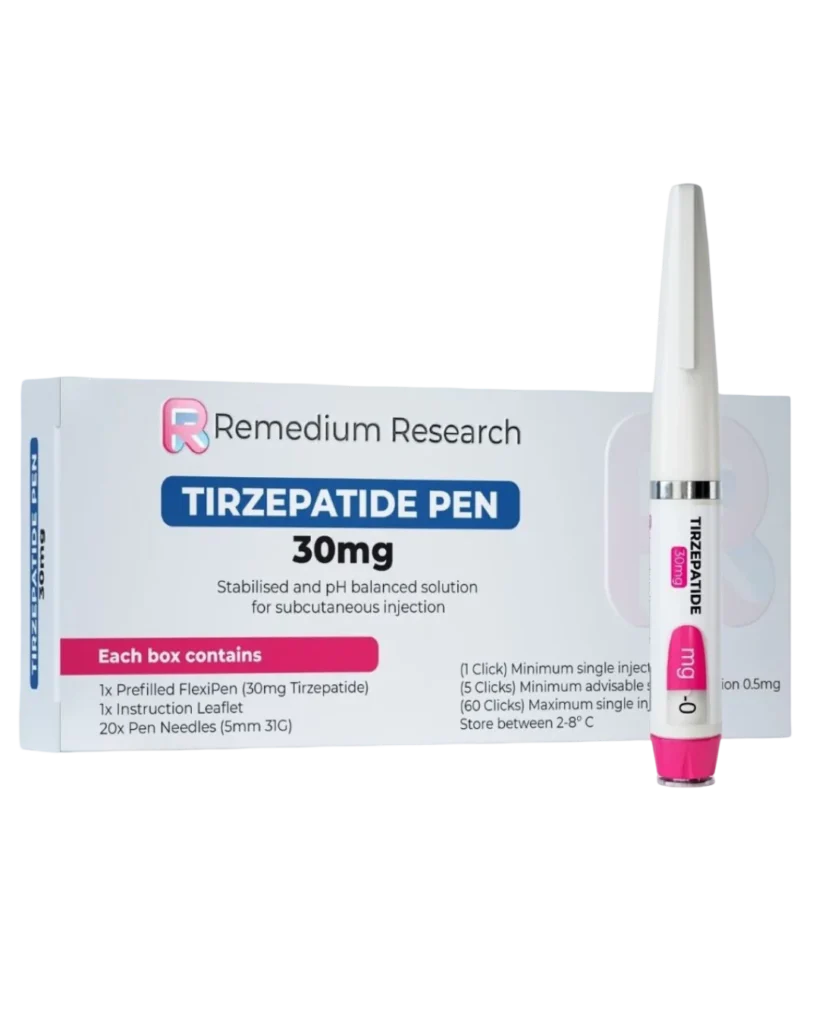
Remedium Research Tirzepatide
Remedium Research provides information on research-oriented peptide materials for qualified laboratory and scientific applications.
Researchers considering a Remedium Research Tirzepatide product should review the individual product specification and available batch documentation before procurement.
Frequently Asked Questions
Is tirzepatide a peptide?
Yes. Tirzepatide is a peptide compound with activity involving GIP and GLP-1 receptors.
What is tirzepatide used for?
Approved tirzepatide medicines have authorised clinical indications. Research-use tirzepatide is instead intended for controlled scientific investigation.
Is tirzepatide the same as semaglutide?
No. Tirzepatide has activity involving GIP and GLP-1 receptors, whereas semaglutide primarily targets GLP-1 receptors.
Is research tirzepatide a medicine?
Research-use material should not be represented as an approved medicine.
Research Use Notice
Remedium Research peptide materials are intended exclusively for controlled laboratory, analytical and scientific research. They are not intended for human or veterinary administration, self-experimentation or therapeutic use.
