Blog
Retatrutide for Weight Loss: Complete Guide to Clinical Research, Obesity & Weight Management
Sep
Posted on September 4, 2026 by Remedium Research Labs
Retatrutide for weight loss has become one of the most closely followed areas of modern obesity and metabolic-health research. Also known by its development name LY3437943, retatrutide is an investigational once-weekly injectable medicine being studied for obesity, overweight, type 2 diabetes, and several obesity-related conditions.
What makes retatrutide particularly interesting is its triple-agonist mechanism. Unlike medicines that primarily target one or two metabolic hormone pathways, retatrutide activates receptors associated with:
- GLP-1
- GIP
- Glucagon
This combination has generated substantial scientific interest because these pathways are involved in appetite regulation, glucose metabolism, energy balance, and body-weight regulation.
Clinical trials have reported substantial reductions in body weight, including results from Phase 2 and Phase 3 development programs. However, retatrutide remains an investigational medicine, and clinical-trial results should not be interpreted as a guarantee of individual weight loss or as evidence that an unapproved online product is safe or legitimate.
This complete guide examines retatrutide for weight loss, retatrutide clinical trials, how retatrutide works, retatrutide side effects, retatrutide vs semaglutide, retatrutide vs tirzepatide, retatrutide FDA approval, and the future of obesity treatment research.
Research and medical-information notice: Retatrutide is an investigational compound. This article is educational and does not recommend self-administration or the purchase of unapproved products. Regulatory status can change, so readers should consult current information from relevant regulatory authorities and qualified healthcare professionals.
What Is Retatrutide?
Retatrutide, also called LY3437943, is an investigational metabolic medicine developed by Eli Lilly.
It is being studied as a triple hormone receptor agonist because it activates three receptor pathways:
GLP-1
Glucagon-like peptide-1 is involved in appetite regulation, glucose metabolism, insulin secretion, and gastrointestinal processes.
GIP
Glucose-dependent insulinotropic polypeptide is an incretin hormone involved in metabolic regulation and glucose-dependent insulin secretion.
Glucagon
Glucagon plays an important role in glucose and energy metabolism and is being investigated as part of retatrutide’s multi-pathway mechanism.
Together, these pathways form the basis of retatrutide’s distinctive pharmacological profile.
How Does Retatrutide Work?
The central research question surrounding retatrutide is how simultaneous activation of GIP, GLP-1, and glucagon receptors influences metabolism and body weight.
1. GLP-1 Receptor Activity
GLP-1 signaling is associated with several physiological processes, including:
- Appetite regulation
- Satiety
- Food intake
- Glucose-dependent insulin secretion
- Gastric emptying
- Glucose regulation
GLP-1 receptor agonism is already an established area of obesity and diabetes pharmacology.
where to buy retatrutide weight loss
2. GIP Receptor Activity
GIP is another incretin hormone involved in metabolic signaling.
Research into GIP receptor activation has expanded significantly with the development of dual GIP/GLP-1 therapies.
Retatrutide adds GIP activity to its broader triple-pathway mechanism.
3. Glucagon Receptor Activity
Glucagon has a different physiological role from GLP-1 and GIP.
It participates in glucose regulation and energy metabolism and is being investigated for its potential contribution to energy expenditure and changes in body composition.
The Triple-Agonist Concept
Retatrutide therefore combines:
GIP + GLP-1 + Glucagon
This is why it is commonly described as a triple agonist or GIP/GLP-1/glucagon receptor agonist.
Retatrutide for Weight Loss: What Do Clinical Trials Show?
One of the primary reasons retatrutide has attracted attention is the magnitude of weight reduction observed in clinical research.
In a Phase 2 obesity study published in the New England Journal of Medicine, retatrutide produced dose-dependent weight reduction over 48 weeks, with the highest-dose group reporting approximately 24% mean weight reduction in the study’s analysis.
Subsequent Phase 3 development has generated additional data.
Lilly reported results from its TRIUMPH-1 Phase 3 study showing approximately 28.3% mean weight reduction at 80 weeks in participants receiving the 12 mg dose.
The company also reported substantial weight reductions in additional Phase 3 populations, including participants with type 2 diabetes and people with obesity and established cardiovascular disease.
These numbers should be interpreted carefully.
Clinical-trial results are not individual guarantees.
Weight change can vary substantially between individuals depending on:
- Study population
- Baseline body weight
- Dose
- Treatment duration
- Adherence
- Medical conditions
- Lifestyle factors
- Trial design
- Treatment discontinuation
Cross-trial comparisons should also be interpreted cautiously because different clinical trials can involve different populations, endpoints, follow-up periods, and methodologies.
Retatrutide Clinical Trials
The development of retatrutide has progressed from early-stage research into a broad Phase 3 clinical program.
Phase 2 Retatrutide Research
The Phase 2 obesity study provided important evidence that retatrutide could produce substantial, dose-dependent changes in body weight.
The findings helped establish the scientific basis for larger clinical trials.
Phase 3 TRIUMPH Program
The TRIUMPH development program has investigated retatrutide across multiple obesity-related populations.
Research areas include:
- Obesity
- Overweight
- Obesity with type 2 diabetes
- Cardiovascular disease
- Obstructive sleep apnea
- Knee osteoarthritis
- Long-term weight management
This broader clinical program is important because obesity is associated with numerous health conditions beyond body weight alone.
Retatrutide and Long-Term Weight Management
Weight loss and weight management are not the same thing.
Initial weight reduction is only one part of obesity treatment.
Researchers also need to understand:
- Whether weight reduction can be maintained
- What happens after treatment interruption
- How body composition changes
- How metabolic markers respond
- How long treatment may need to continue
- Whether different maintenance strategies affect outcomes
For this reason, long-term retatrutide weight management research is an important component of the drug-development program.
Future evidence will help clarify how sustained weight management should be approached if retatrutide ultimately receives regulatory approval.
Retatrutide for Obesity
Obesity is a complex chronic disease involving biological, environmental, behavioral, genetic, and socioeconomic factors.
Modern obesity treatment can include:
- Nutrition intervention
- Physical activity
- Behavioral support
- Prescription anti-obesity medication
- Treatment of related medical conditions
- Metabolic and bariatric surgery for selected patients
- Long-term weight-maintenance strategies
Retatrutide is being investigated as a potential pharmacological treatment within this broader framework.
Its multi-receptor mechanism is particularly relevant to researchers studying the biological regulation of body weight.
Retatrutide and Type 2 Diabetes Research
Retatrutide is also being investigated in people with type 2 diabetes and obesity or overweight.
This is scientifically significant because obesity and type 2 diabetes are closely interconnected metabolic conditions.

Research has examined outcomes involving:
- Body weight
- Glycemic control
- HbA1c
- Metabolic health
- Cardiometabolic risk factors
The effects observed in clinical research should not automatically be interpreted as approval for treating diabetes or obesity. Specific medical indications depend on regulatory review.
Retatrutide and Obesity-Related Conditions
The retatrutide development program extends beyond weight reduction.
Researchers are investigating whether changes in body weight and metabolic health may translate into improvements in obesity-associated conditions.
Areas of investigation include:
Obstructive Sleep Apnea
Clinical research has examined retatrutide in adults with obesity and obstructive sleep apnea.
Knee Osteoarthritis
Studies have also investigated outcomes involving obesity-associated knee osteoarthritis.
Cardiovascular Risk
Other Phase 3 research includes people with obesity and established cardiovascular disease.
These studies are important because effective obesity treatment may have consequences extending beyond the number shown on a scale.
Retatrutide Side Effects and Safety
One of the most important questions surrounding any investigational medicine is its safety profile.
Because retatrutide remains under clinical investigation, its complete long-term safety profile has not yet been established.
Clinical studies have reported gastrointestinal adverse events, with reported effects including:
- Nausea
- Diarrhea
- Vomiting
- Constipation
- Abdominal symptoms
The frequency and severity of adverse events can vary according to dose, treatment duration, and individual characteristics.
Researchers also monitor:
- Treatment discontinuation
- Dose escalation
- Serious adverse events
- Laboratory findings
- Long-term tolerability
- Changes in nutritional intake
- Other safety outcomes
It is therefore inaccurate to describe retatrutide as a “100% safe” weight-loss injection.
No responsible clinical-research article should make such a guarantee.
Is Retatrutide FDA Approved?
Retatrutide’s regulatory status should be checked against current FDA and manufacturer information because it can change as clinical development progresses.
As an investigational medicine, retatrutide should not be presented as an FDA-approved weight-loss treatment unless and until the FDA grants approval for a specific indication.
This distinction is particularly important for searches such as:
- Is retatrutide FDA approved?
- Retatrutide FDA approval
- Retatrutide approval date
- When will retatrutide be available?
- Is retatrutide available by prescription?
- Where can retatrutide be obtained?
Searchers should rely on official regulatory information rather than claims made by online sellers.
Is Retatrutide Available to the Public?
Investigational medicines are different from approved prescription medicines.
An investigational compound may be available within appropriately authorized clinical research while not being commercially available as an approved treatment.
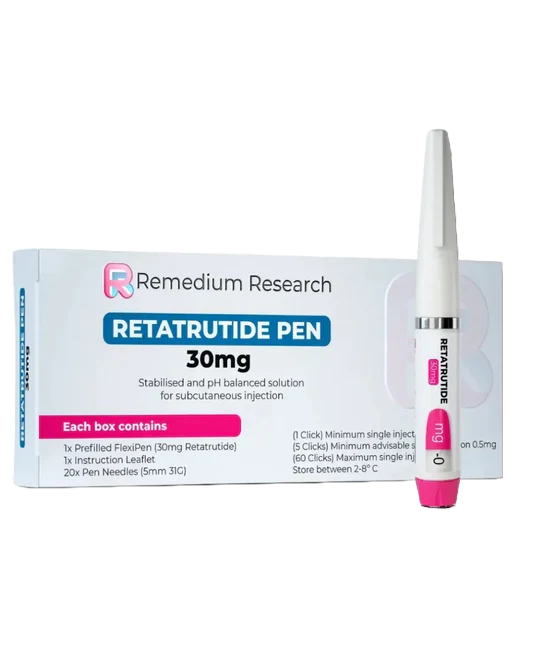
This distinction matters because websites advertising products described as “retatrutide pens,” “retatrutide injections,” or “retatrutide for sale” do not establish that those products contain authentic pharmaceutical-grade retatrutide or have regulatory approval.
Consumers should be particularly cautious about websites making claims such as:
- FDA-approved retatrutide
- Guaranteed weight loss
- 100% safe retatrutide
- Pharmaceutical retatrutide without supporting documentation
- Guaranteed authentic retatrutide
- Approved retatrutide injection pens
Regulatory authorization and product authenticity should be verified independently.
Retatrutide Injectable Pen: What Does the Research Show?
Search interest around retatrutide injectable pens, retatrutide prefilled pens, and retatrutide injection pens has increased alongside interest in GLP-1 and other injectable obesity medicines.
However, the delivery device and the investigational medicine should not be confused.
Clinical research has investigated retatrutide as a once-weekly subcutaneous injection.
That does not mean every product marketed online as a “retatrutide pen” is an approved pharmaceutical product.
A research article should therefore distinguish between:
Clinical-trial administration
and
commercially marketed products claiming to contain retatrutide.
This distinction is particularly important for patient safety and accurate medical communication.
Retatrutide vs Semaglutide
Retatrutide and semaglutide have an important mechanistic difference.
| Feature | Retatrutide | Semaglutide |
|---|---|---|
| GLP-1 activity | Yes | Yes |
| GIP activity | Yes | No |
| Glucagon activity | Yes | No |
| Mechanism | Triple agonist | GLP-1 receptor agonist |
| Regulatory status | Investigational | Approved semaglutide products exist for specific indications |
| Weight-management research | Extensive and ongoing | Extensive clinical evidence |
Retatrutide’s distinctive feature is its simultaneous activity at GIP, GLP-1, and glucagon receptors.
Semaglutide primarily targets the GLP-1 receptor.
However, direct comparisons should not be inferred simply by comparing results from separate clinical trials.
Retatrutide vs Tirzepatide
Tirzepatide and retatrutide are also mechanistically different.
| Feature | Retatrutide | Tirzepatide |
|---|---|---|
| GLP-1 receptor activity | Yes | Yes |
| GIP receptor activity | Yes | Yes |
| Glucagon receptor activity | Yes | No |
| Mechanism | Triple agonist | Dual GIP/GLP-1 agonist |
| Development status | Investigational | Approved products exist for specific indications |
| Weight-management research | Ongoing Phase 3 development | Extensive clinical evidence |
Tirzepatide therefore targets GIP + GLP-1, while retatrutide adds glucagon receptor activity.
A direct head-to-head trial is more informative than comparing unrelated studies because trial populations and study designs can differ.
Why Is Retatrutide Receiving So Much Attention?
Several factors have contributed to interest in retatrutide.
Triple-Pathway Mechanism
The simultaneous targeting of GIP, GLP-1, and glucagon distinguishes retatrutide from established single- and dual-pathway medicines.
Substantial Clinical-Trial Weight Reduction
Phase 2 and Phase 3 studies have reported substantial average reductions in body weight.
Broad Research Program
Retatrutide is being investigated across multiple obesity-related conditions.
Next-Generation Obesity Medicine
The compound represents the broader movement toward multi-pathway metabolic therapies.
Long-Term Research Potential
Scientists are studying not only initial weight reduction but also metabolic health, body composition, and weight maintenance.
Retatrutide and Body Composition
Weight on the scale does not tell the entire story.
Modern obesity research increasingly examines body composition, including:
- Fat mass
- Lean mass
- Muscle mass
- Visceral fat
- Waist circumference
- Changes in metabolic health
This is important because future obesity treatments may be evaluated not only by how much total body weight is lost but also by what type of tissue accounts for that change.
Body-composition research can therefore provide additional information about the potential metabolic effects of emerging therapies.
Retatrutide and Metabolic Health
Another important research area is the relationship between weight reduction and metabolic health.
Researchers are examining outcomes such as:
- Blood glucose
- HbA1c
- Insulin sensitivity
- Lipid parameters
- Blood pressure
- Waist circumference
- Cardiometabolic risk
The purpose of these studies is to understand whether a treatment produces benefits extending beyond weight reduction.
Retatrutide Research vs Approved Weight-Loss Medicines
It is essential to distinguish between an investigational medicine and an approved obesity medication.
Approved medicines
An approved medicine has completed the regulatory process required for a particular indication.
Investigational medicines
An investigational medicine is still being studied to determine its safety, efficacy, dosing, and appropriate indications.
Online products
An online product claiming to contain an investigational compound does not automatically have pharmaceutical approval, quality assurance, or clinical validation.
This distinction is particularly important when researching retatrutide for sale, retatrutide online, retatrutide pens, and retatrutide injections.
Search visibility should never substitute for regulatory verification.
What Researchers Still Need to Learn About Retatrutide
Despite encouraging clinical findings, important questions remain.
Researchers continue to investigate:
Long-Term Safety
Long-term exposure requires continued monitoring.
Weight Maintenance
Researchers need to understand how weight changes are maintained over time.
Treatment Discontinuation
Additional research can help clarify what happens when treatment is stopped.
Body Composition
The relationship between fat loss and lean-mass changes remains important.
Optimal Dosing
Dose selection and escalation require careful clinical evaluation.
Different Patient Populations
Results can vary among people with obesity, type 2 diabetes, cardiovascular disease, sleep apnea, and other conditions.
Regulatory Approval
Ultimately, regulatory authorities must evaluate the complete evidence before determining whether a medicine should be approved.
Frequently Asked Questions About Retatrutide
What is retatrutide?
Retatrutide, also known as LY3437943, is an investigational medicine developed by Eli Lilly and studied for obesity, overweight, type 2 diabetes, and related metabolic conditions.
How does retatrutide work?
Retatrutide is designed to activate three receptor pathways: GIP, GLP-1, and glucagon.
Is retatrutide a GLP-1?
Retatrutide has GLP-1 receptor activity, but it is more accurately described as a GIP/GLP-1/glucagon triple agonist.
Is retatrutide the same as semaglutide?
No. Semaglutide primarily targets the GLP-1 receptor, whereas retatrutide targets GIP, GLP-1, and glucagon receptors.
Is retatrutide the same as tirzepatide?
No. Both activate GIP and GLP-1 pathways, but retatrutide also activates the glucagon receptor.
How much weight can retatrutide cause people to lose?
Clinical trials have reported substantial average weight reductions, including approximately 24% in the highest-dose group in the Phase 2 obesity study and approximately 28.3% at 80 weeks in the reported 12 mg TRIUMPH-1 Phase 3 results.
These are population-level clinical-trial results and should not be interpreted as an expected individual outcome.
Is retatrutide FDA approved?
Its regulatory status should be verified against the latest FDA information. An investigational status should not be confused with approval for public treatment.
Can I buy retatrutide online?
The presence of an online listing does not establish that a product is an approved or authentic pharmaceutical medicine. Consumers should verify regulatory status and discuss approved treatment options with a qualified healthcare professional.
Is retatrutide available as a prefilled pen?
Clinical research has studied retatrutide as a once-weekly subcutaneous injection. Online claims about commercial prefilled retatrutide pens should not be assumed to represent an approved pharmaceutical product.
What are retatrutide side effects?
Clinical studies have reported gastrointestinal adverse events including nausea, diarrhea, vomiting, and constipation. The complete long-term safety profile remains under investigation.
Is retatrutide safe?
The safety profile continues to be evaluated through clinical research. It is inappropriate to describe an investigational medicine as guaranteed safe.
When could retatrutide become available?
Availability depends on completion of clinical development, regulatory review, approval, manufacturing, and commercialization. Any projected timeline should be checked against current statements from the developer and relevant regulators.
The Future of Retatrutide and Obesity Research
Retatrutide represents an important development in the continuing evolution of obesity and metabolic medicine.
The compound’s triple-pathway mechanism—GIP + GLP-1 + glucagon—has generated significant interest because obesity involves multiple interconnected biological systems.
The research landscape is moving beyond single-pathway approaches toward therapies that investigate several metabolic signals simultaneously.
Future obesity research is likely to continue exploring:
- Multi-receptor agonists
- GLP-1 therapies
- GIP/GLP-1 therapies
- Triple agonists
- Body-composition outcomes
- Muscle preservation
- Long-term weight maintenance
- Cardiometabolic health
- Obstructive sleep apnea
- Obesity-related osteoarthritis
- Personalized obesity medicine
- Advanced injectable drug delivery
Final Perspective
Retatrutide for weight loss is one of the most closely watched areas of next-generation obesity research.
Its distinctive GIP/GLP-1/glucagon triple-agonist mechanism separates it from established GLP-1 therapies and dual GIP/GLP-1 medicines. Clinical research has reported substantial reductions in body weight, while ongoing studies are examining broader metabolic and obesity-related outcomes.
At the same time, the distinction between investigational research and approved medical treatment remains essential.
Searches for retatrutide weight loss, retatrutide clinical trials, retatrutide side effects, retatrutide mechanism, retatrutide FDA approval, retatrutide vs semaglutide, retatrutide vs tirzepatide, retatrutide injection, and retatrutide prefilled pen reflect growing public interest in the compound.
The most reliable way to understand retatrutide is to follow the clinical evidence, regulatory information, peer-reviewed research, and official developer updates as the development program progresses.
Remedium Research Labs provides research-oriented educational information about emerging metabolic medicines, peptide research, obesity science, injectable technologies, and the future of weight management.
